Model different replication topologies.
GIFRÖST can be configured as a Kafka-centered replication layer for simple database-to-database flows and more advanced distribution models. Source connectors publish changes into Kafka, while sink connectors subscribe to selected topics and deliver the data to one or more target systems.
Topology overview
In GIFRÖST, replication topology is not limited to a single direct link between two databases. The topology is built from connector instances, Kafka topics, table mappings, routing rules, transformations, and target connector subscriptions. This makes it possible to model common CDC patterns used in migrations, reporting, distribution, modernization, and high-availability architectures.
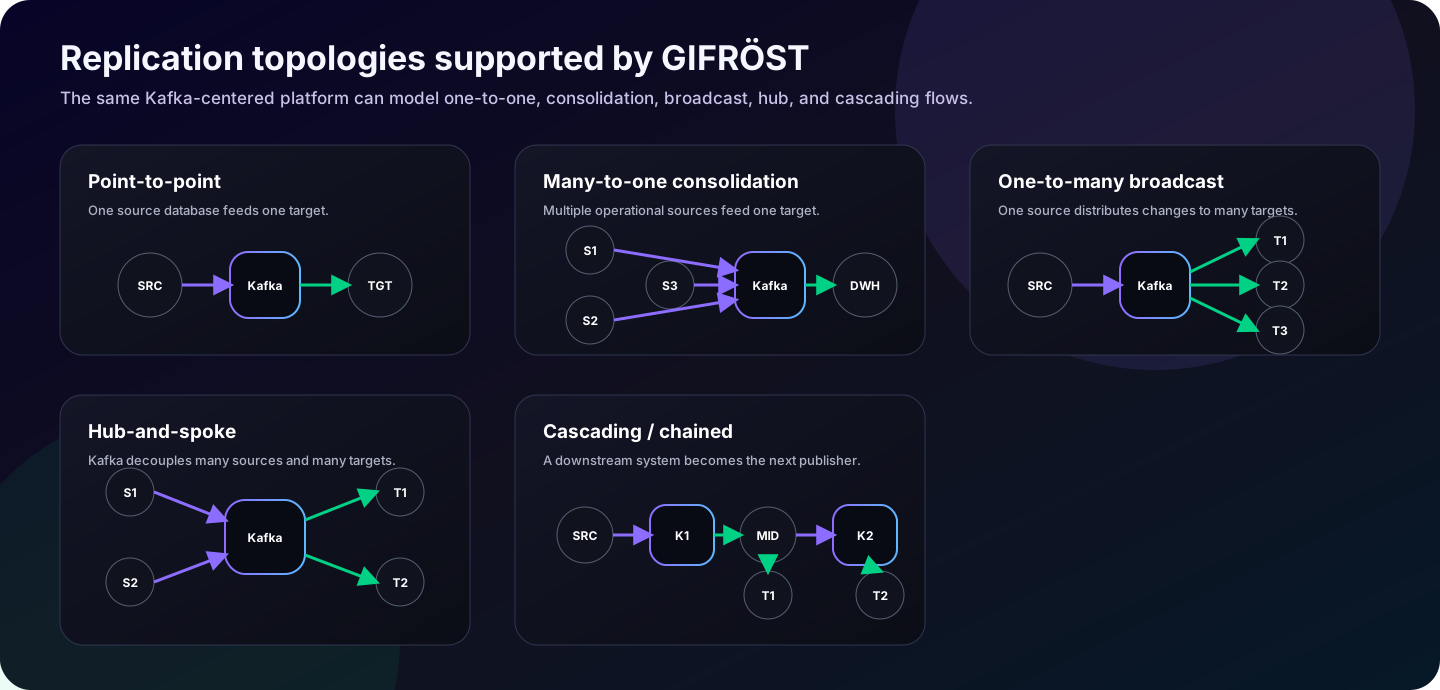
Kafka acts as the central exchange layer. Source connectors capture changes and write them to topics; target connectors read from those topics and apply the data to the destination systems.
Supported patterns
A single source database feeds a single target. This is the simplest topology for migration, synchronization, system replacement, or a dedicated reporting copy.
Multiple source systems publish changes into Kafka and one target consumes the consolidated result. This pattern is common for data warehouses, data marts, audit stores, and operational reporting platforms.
One source database distributes changes to multiple targets. Each target can receive the same data or a filtered subset depending on topic subscriptions, transformations, and routing configuration.
Kafka works as a central event hub between many source and target systems. This reduces point-to-point coupling because producers and consumers can be added independently.
A downstream system can become a source for another downstream target. This is useful when replication is staged by region, network zone, processing layer, or ownership boundary.
Oracle GoldenGate documents replication topologies such as one-to-many and cascading in its high availability best practices overview and describes advanced broadcast variants in Advanced Topologies. PostgreSQL logical replication describes publisher/subscriber data-flow concepts in Logical Replication.